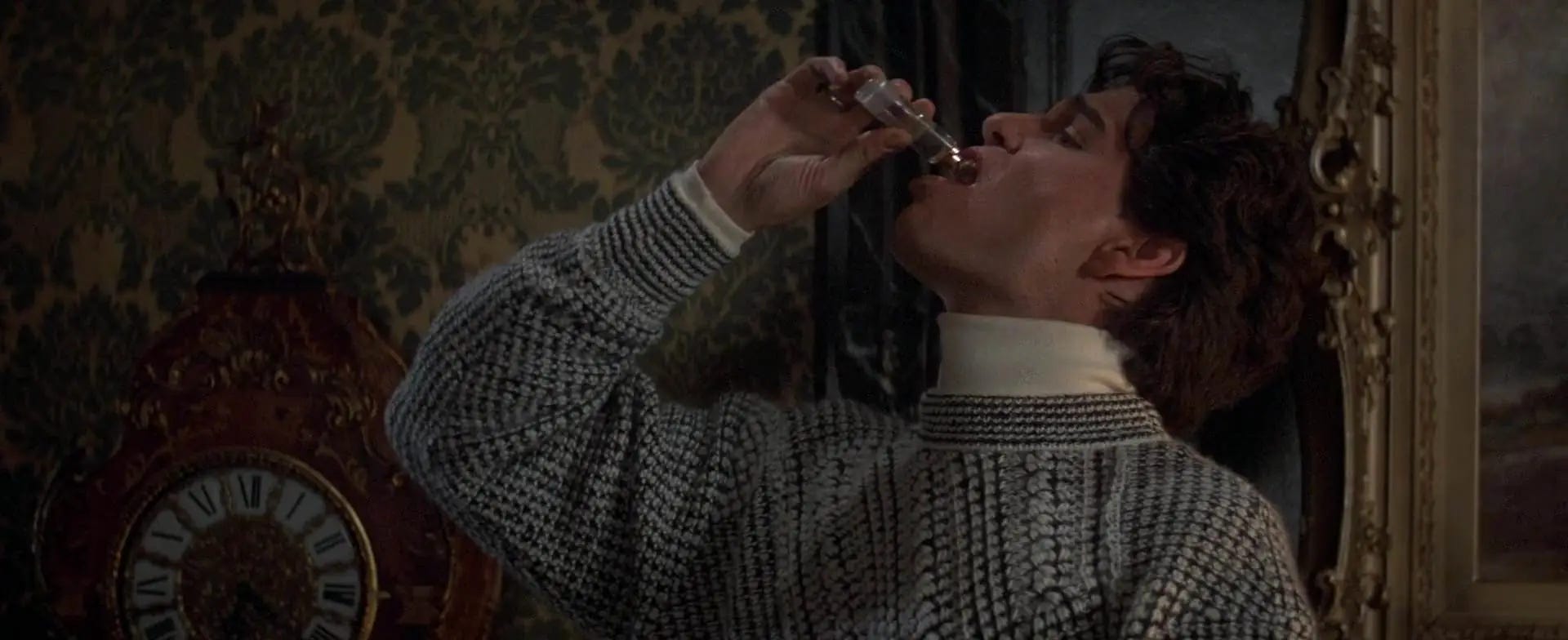
Every Halloween, I become nostalgic for trick-or-treating in the ‘90s, return to my horror movie obsession, and binge a few episodes of Are You Afraid of the Dark in my free time.
I love watching old horror movies again and again for little clues, goofs, and easter eggs, whether the movie in question is a masterpiece or something absurdly terrible.
It makes perfect sense that two of my favorite horror films are also the two in which whiskey features the most significantly, though I admit horror is not a medium that is overly kind to alcohol in general.
Blood (or, rather, corn syrup and red food dye) may be the most important liquid in horror, but alcohol has long been a fixture — at least as far back as the Strange Case of Dr Jekyll and Mr Hyde, whose titular duo represent the sober and drunken sides of one man.
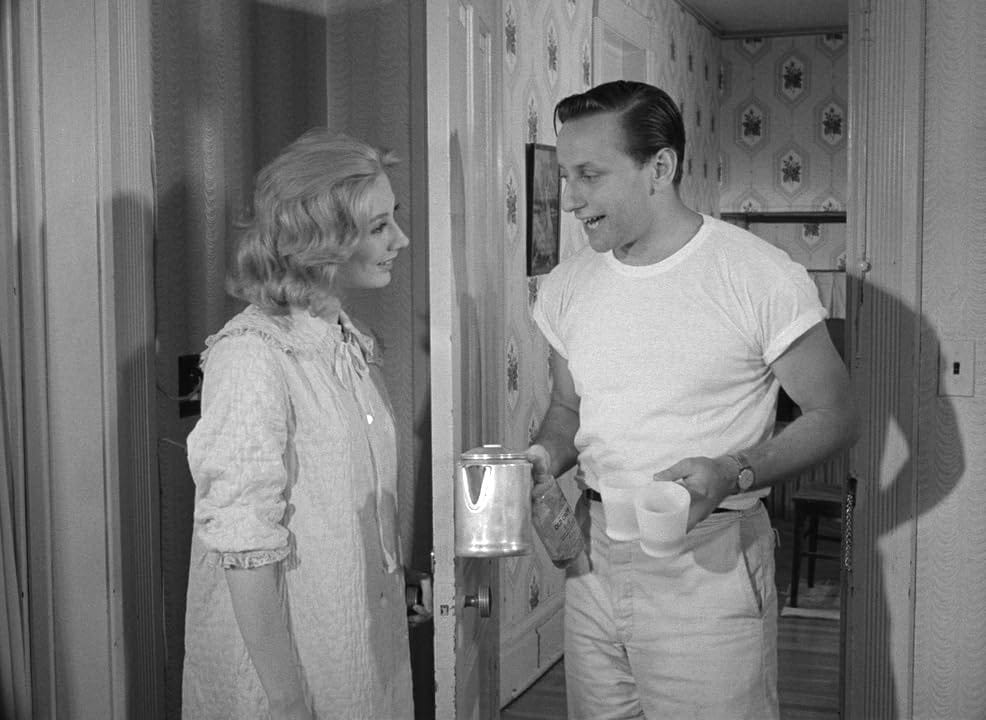
In the 1962 cult classic Carnival of Souls, the main character, Mary Henry, is offered whiskey for her morning coffee by boarding housemate John Linden. Mary — a church organist who doesn’t attend church — is a countercultural final girl, and a pint of Old Crow is meant to show the audience that she does draw a line of propriety somewhere. (I should point out that this scene and most of the movie takes place in Utah, so I guess a morning shot is the modern day equivalent of a morning line of coke?)
Modern horror, though, likes putting whiskey in the hands of its supporting characters for less judgmental reasons.
Halloween 4: The Return of Michael Myers was one of the franchise's stalest moments, but in one interesting scene, two of the franchise’s best characters meet and talk about the nature of evil. It closes with Reverend Sayer offering Dr. Loomis a swig from a pint of Dickel (he accepts).
There’s a drinking contest in Leprechaun 2 — one of the worst horror movies ever made — and wouldn’t you know they went for the creative choice and picked irish whiskey. None of the bottles appear to be real brands.
Horror these days has some picky drinkers, too. In 28 Days Later, as outbreak survivors ransack a store for supplies, Brendan Gleeson’s character cautions, “You can’t just take any crap,” before directing him to Lagavulin 16, which I find relatable and realistic. Equally realistic is a scene in The Blair Witch where Heather Donahue remarks “I hate scotch,” as she gags on a chug of Johnnie Walker Red Label.
Significant Horror Whiskeys
Only two movies make whiskey a pillar of the story in some capacity —not necessarily essential to the film, but a powerful symbol.
Those two movies came out within two years of each other. Both featured snow, isolation, and brilliant directors who knew how to tease audiences and leave unanswered questions. (Depending on how you feel about conspiracy theories, both are kind of movies about space, too, I guess.)
They are 1982’s The Thing and 1980’s The Shining.
I’ll get to The Shining tomorrow (for real, it’s already scheduled; subscribe if you don’t already), but my final answer for the most significant whiskey in horror has to go to the J&B Scotch bottle(s) in The Thing.
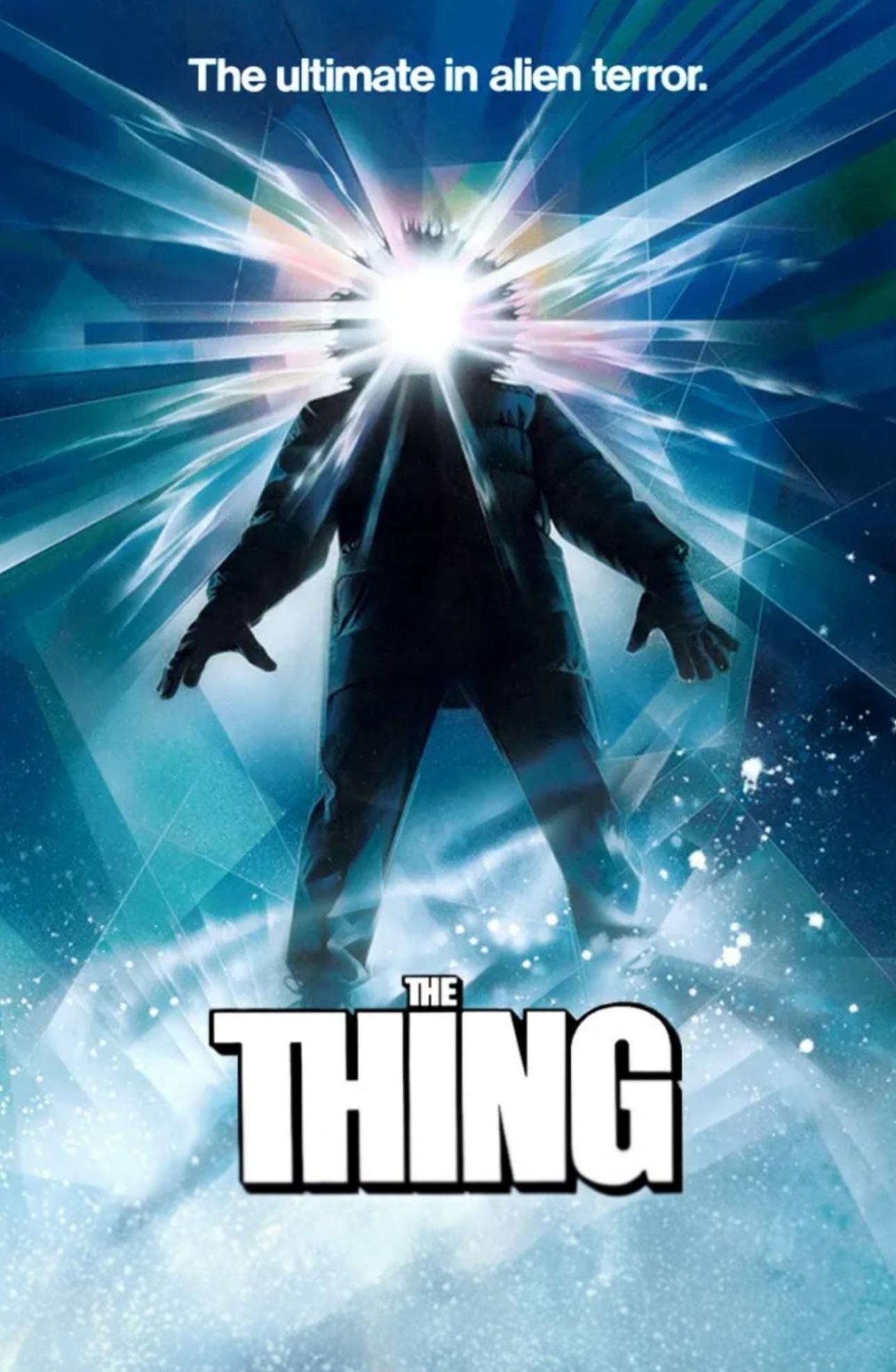
The Thing is a monster movie, an alien movie, and a psychological thriller with a simple plot. A group of American researchers waits out the winter in Antarctica’s McMurdo Station when a shapeshifting alien infection spreads from a nearby Norwegian outpost. It picks off survivors one by one as helicopter pilot R. J. MacReady (Kurt Russell) and chief mechanic Childs (Keith David) try to quarantine and kill it.
MacReady is a smart guy. We’re introduced to him in isolation from the other researchers, where, drinking a glass of scotch, he’s battling a chess program on a computer. MacReady loses, and dumps the remaining half glass into the computer, destroying it.
What that tells us about his character and the film itself depends on the details you notice. A quick glance would show a man with a drinking problem, a short temper, and little regard for data security. But over the decades, the nerds have really gone to work on this scene.
After Mac makes his move and the computer counters, he smirks, questioning, “Poor baby, you’re starting to lose it, aren’t ya?” On the next moveset, however, when the computer declares checkmate, the layout of the board is completely different, suggesting that indeed the computer and not Mac is the problem (the real-world chess program that this scene uses also did have an infamous bug).
The question begged is whether you think Mac is right, because he certainly believes he is. Is he smarter than the computer, or just a guy with an ego? Doesn’t matter — only one of them can hold their liquor.
In the final act of the film, that’s more or less what happens. The “Thing” has taken over most of the site and killed or taken most of the researchers, MacReady and the other survivors make Molotov cocktails out of J&B bottles to destroy the “Things” and a spaceship(?!) that one of them has been trying to build to escape Antarctica.
The survivors fight the Things, and the final one appears to be destroyed by fire. You could argue Mac survived thanks to a substantial supply of J&B bottles.
MacReady and Childs are the lone surivors at the end, each “dealing” with challenges separately before reuniting. Their suspicion for one another has not reached its peak.
Finally resting, both men glare from across a burning fire. MacReady pulls out one final bottle of J&B. He offers it to Childs, who takes a drink. MacReady smiles. Credits roll.
What’s in the Bottle?
We come at last to the final scenes of the film, and the “molotov theory.”
J&B’s importance in The Thing also varies based on individual theories about the movie’s finale. For instance, if you believe that MacReady is human and Childs has become a “Thing,” then the theory is that Mac offers Childs a whiskey bottle full of gasoline to see if he’s human.
There are four possible explanations for where the movie ends:
The first and most direct is that MacReady, who remains human, suspects that Childs has been transformed.
The second suggests that neither has been transformed.
The third suggests that by the time Childs returns, MacReady has been converted as a result of his contact with Things earlier in the film.
The fourth (and most bleak) theory suggests that perhaps both men have been transformed, share an understanding that they’re on the same team, and await rescue in hopes of spreading to the rest of earth.
Carpenter and Russell have both gone on the record that the ending of the film was always designed to be intentionally vague and without a clear answer. The point is to leave you with unease and uncertainty, not bring in the cavalry and let our heroes ride off safely into the sunset.
The Molotov theory suggests that we’re given one extra piece of information by the director, though. The theory is that the whiskey Childs is offered and consumes is gasoline from another Molotov. The idea is that MacReady offered the gas to Childsthing to see if it reacted, and when it did not, Kurt Russell’s subtle smirk at the end of the film is a knowing one that he still has one more Thing to fight.
The only theories Carpenter and Russell have really debunked are the so-called “gotcha” theories — the ones that rely on a movie mistake or a “what if” speculation to read more into a scene than is actually there.
The End?
At the end of the film, we’re not really sure of anything. Is Childs human? Is MacReady? Is the J&B real? It’s driven some people insane for years, while others just move on with their day, and maybe that’s what’s so great about the film.
Because you can choose to care or not, but you can’t ever be sure of your interpretation. Most theories about the ending are equally valid, and therefore equally unimportant because they don’t offer any certainty.
“Probably correct” is, after all, fine when we’re discussing a movie theory. It’s not like the viewing experience is life-or-death (though I’d probably choose death before re-watching the Exorcist sequels).
But consider those stakes as if you’re hunkered down in the snow yourself. Do you trust either of them? Do you trust your own mind?
Would you like a drink?